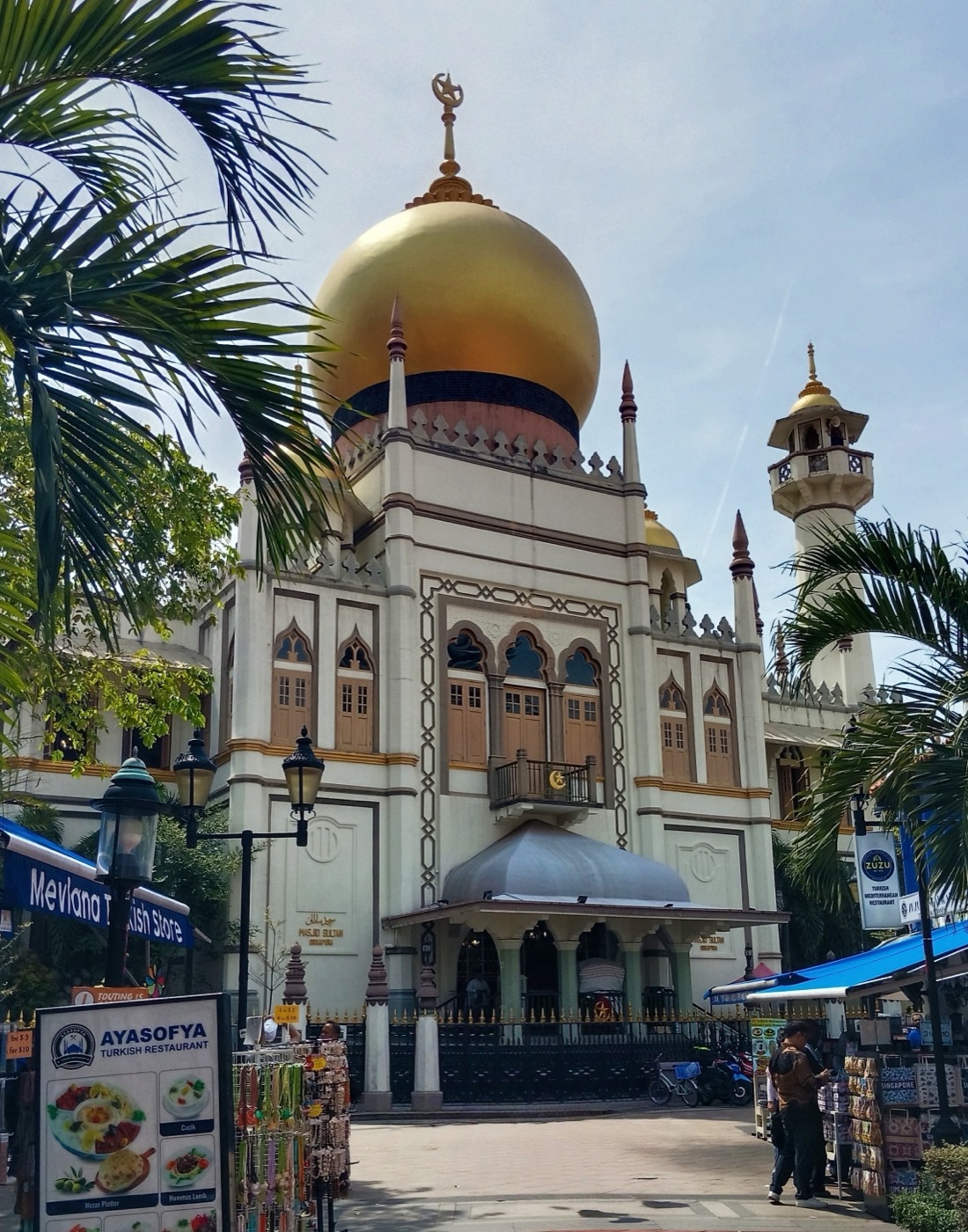
Sociopoly
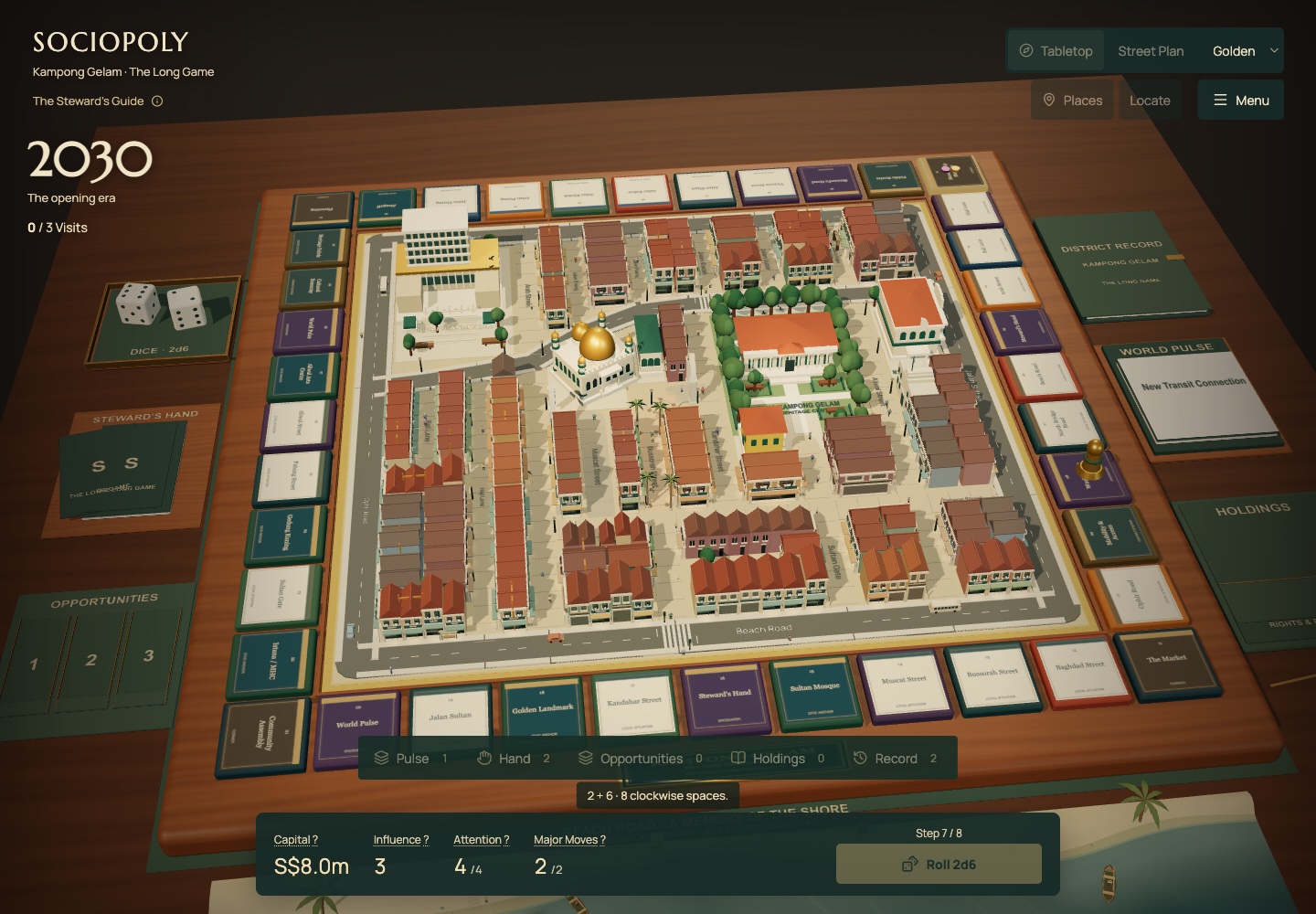
A game imagining the future of Kampong Gelam through culture, property, tourism, community and development.
The AI & Budaya event showcase. Small beginnings, meaningful experiments, and work still taking shape.
Existing work shared as inspiration for the evening.
A game imagining the future of Kampong Gelam through culture, property, tourism, community and development.
AI-assisted research into district history, conserved shophouses, property economics and possible long-term stewardship.
Participant submissions appear here after organiser review.
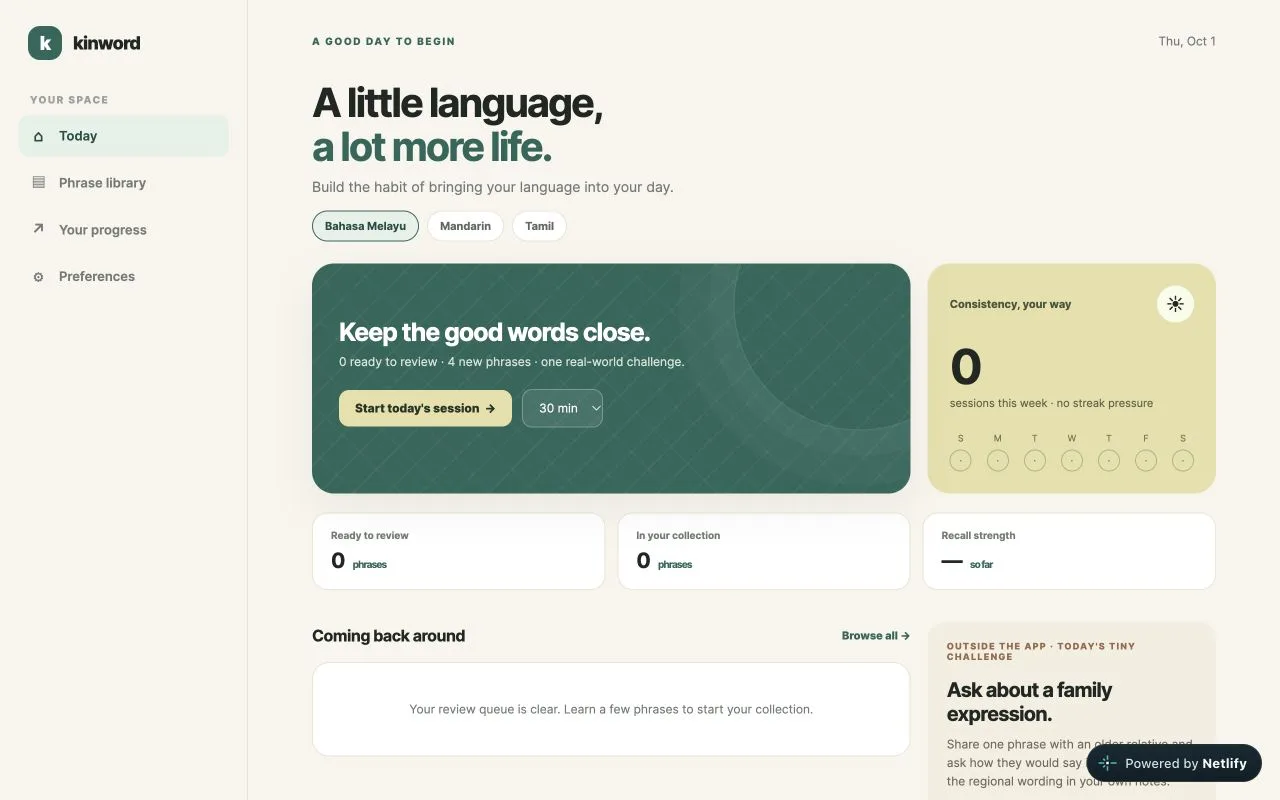
Language Learning focused on the Singapore's official languages
Targeted to Gen Z and millennials who already has a foundation in their mother tongue but just needs a little push and practice while the learning the culture and heritage of the language - i hope.
Raya Route helps families plan the best driving order and full-day schedule for visiting loved ones across Singapore during Hari Raya.
Raya Route helps families plan a full day of Hari Raya visits around Singapore. Enter a starting point and family homes, choose when to start, set how long you’ll stay at each house, and pick anyone who must be visited first. It then finds an efficient round trip, shows the route on a map, and estimates when you’ll arrive, leave, and get home. Why it matters: Hari Raya is about spending time with loved ones, but travelling between homes can mean lots of planning and backtracking. Raya Route makes the journey easier to organise, so families can spend less time figuring out the route and more time together. Travel times are estimates; traffic can change. Illustrative example 1. Start at 10:30 AM and add Nenek’s house, Mak Long’s house, and two other family visits. 2. Choose Nenek’s house as the first stop and set visit durations—for example, two hours at Nenek’s and 45 minutes at each other home. 3. Raya Route plans the remaining stops around that choice, includes the drive back to the starting point, and displays the suggested order, road map, estimated arrival and departure times, and estimated time back home. Help families that got problem ending raya visit before midnight.
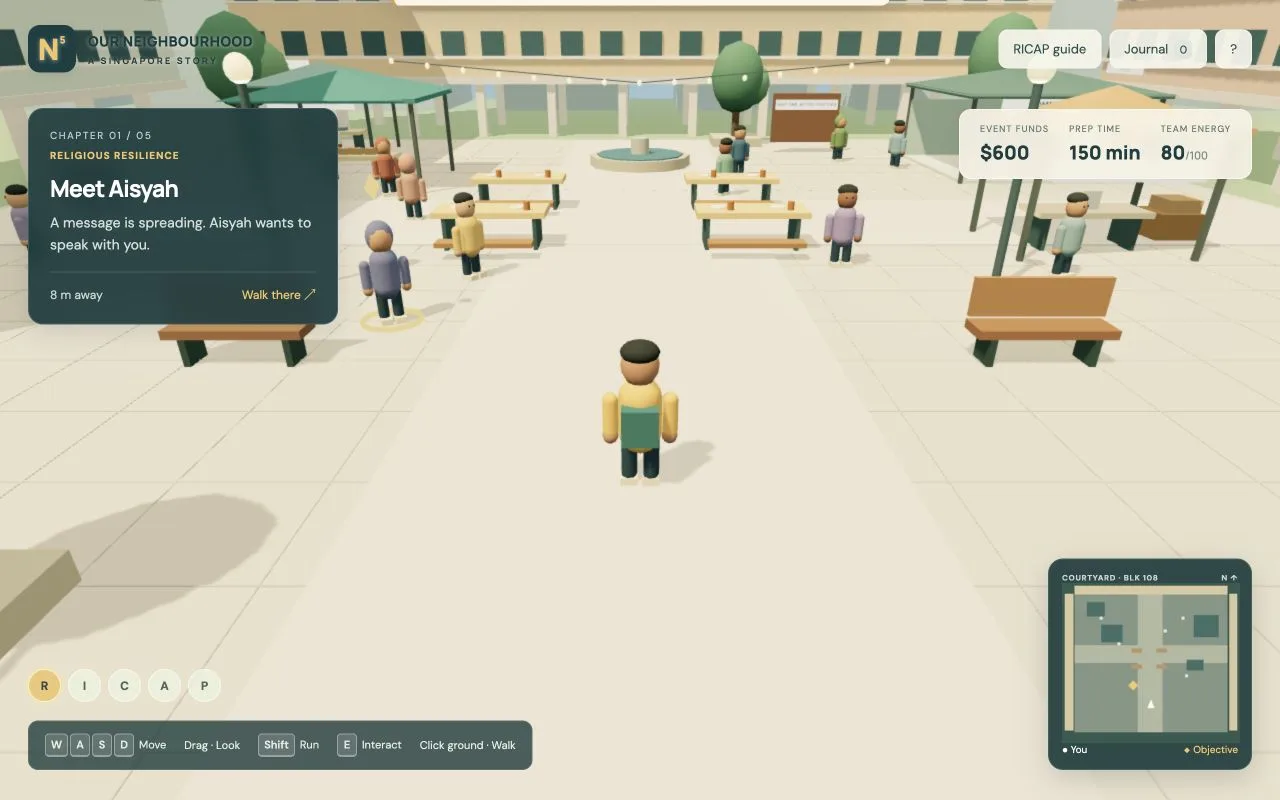
A 3D adventure exploring Singapore Muslim Identity through everyday choices and their consequences.
Players explore a Singapore neighbourhood, meet fictional residents, and make decisions that affect their community. Each scenario connects to the five Singapore Muslim Identity attributes promoted by MUIS: Religious Resilience, Inclusiveness, Contributiveness, Adaptability and Progressiveness. From welcoming neighbours to sharing responsibilities and responding to unexpected challenges, players experience immediate consequences, delayed repercussions and opportunities to repair mistakes. Designed for young people, educators and community groups, the game turns abstract values into relatable experiences and encourages reflection on practising these attributes in multicultural Singapore. We have built and published a playable third-person 3D prototype with five connected scenario chapters.
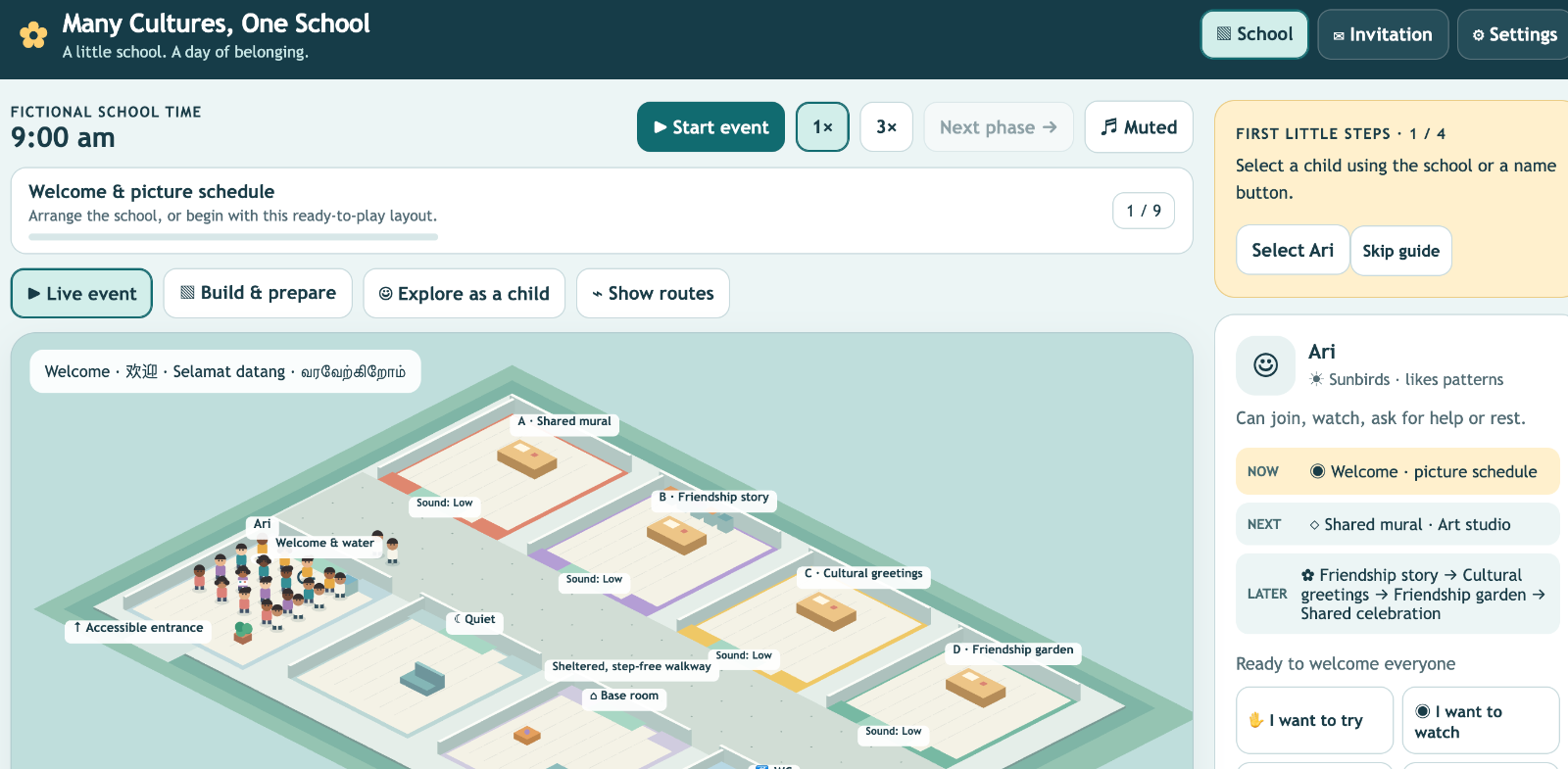
Cultural and inclusivity activity with interactive SIMs.
I made the interactive SIMs to cultivate cultural learning and inclusivity of children with disabilities. It matters as inclusivity still has certain gaps to address.
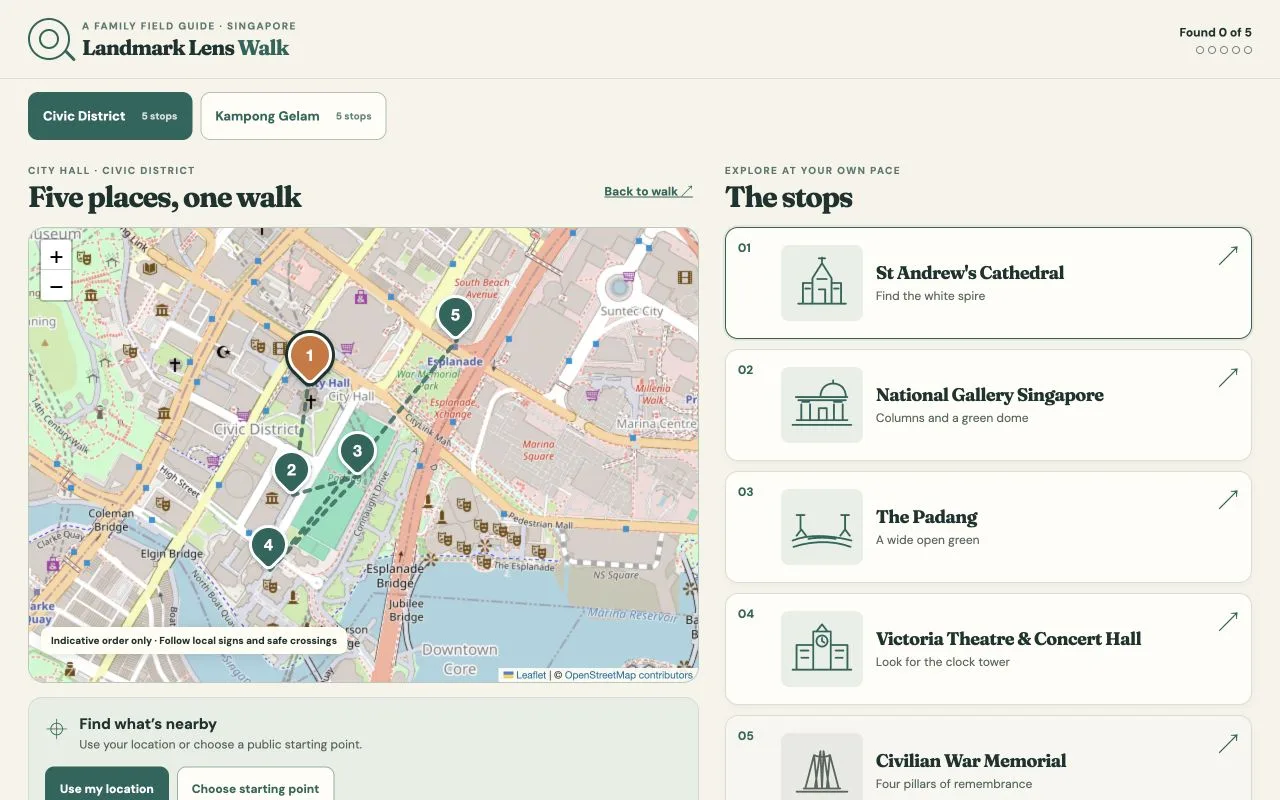
Build a small neighborhood map with three to five nearby visual landmarks, each linked to a short, sourced note about its place or history. Use simple icons or sketches as visual anchors; show approximate locations
Familiar visual cues make a heritage walk easier to follow, while clear sources help visitors distinguish documented facts from interpretation. Build tonight: Use a free map with actual locations, taking the City Hall area in Singapore as a test for tonight with information from cited public sources; add landmark cards and a simple “near me” view using manual location or device GPS with consent. First step: Pick one neighborhood and list three visible landmarks you can describe without sharing private or sensitive location data.
An interactive webpage for discovering Jawi, Javanese, and Sundanese writing through simple matching games
It is simple introduction to three types of Aksara – Jawi, Jawa and Sunda – through an online card game.
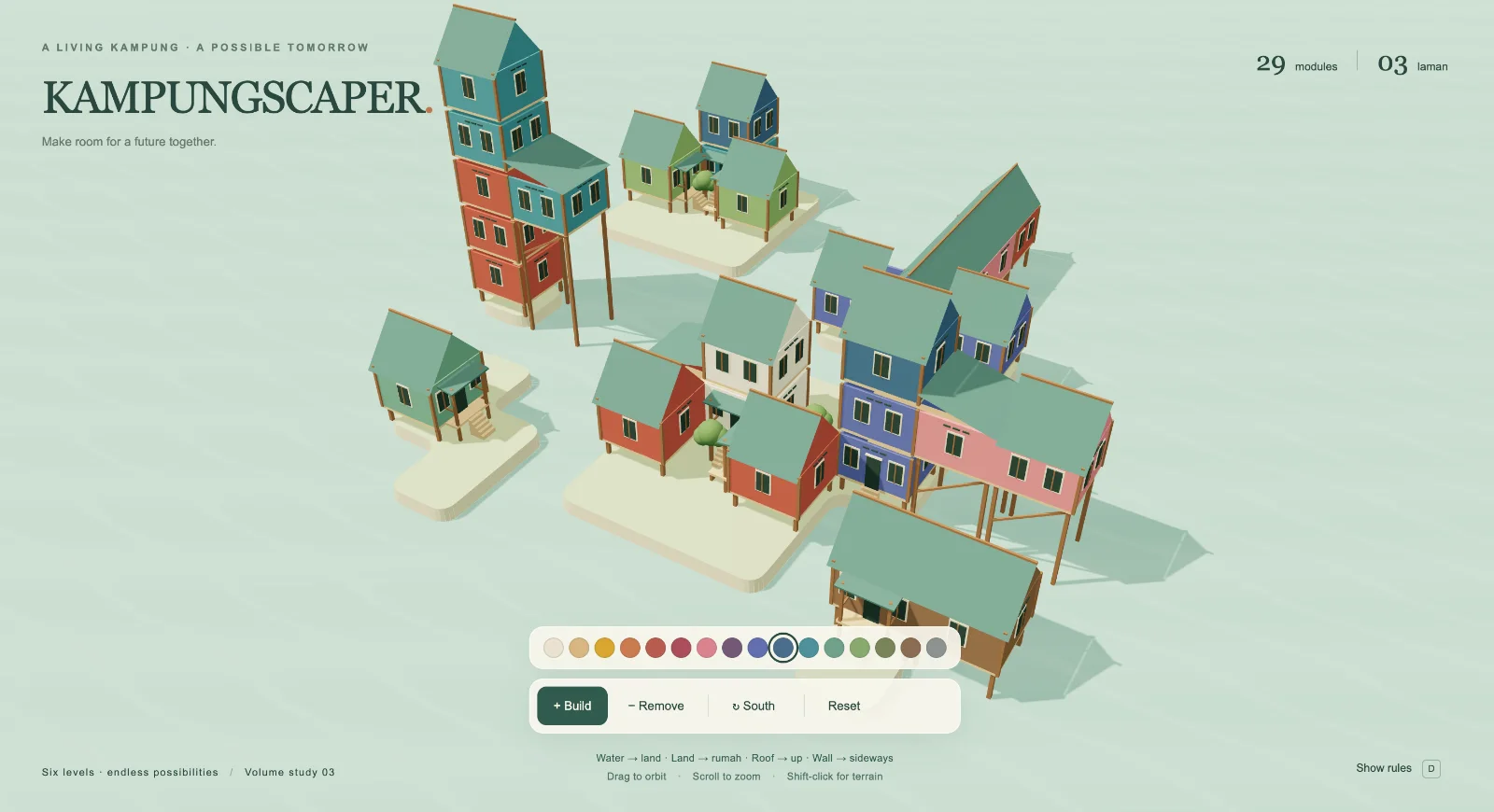
Kampungscaper is a procedural 3D kampung builder where players shape a living, futuristic settlement and discover how traditional architectural elements and communal spaces connect and evolve.
Kampungscaper lets players build a futuristic kampung through simple interactions, where procedural rules determine how land, traditional house forms and communal spaces respond and connect to one another. By turning kampung typologies and spatial relationships into something players can interact with, the experience offers a playful way to discover how Malay architectural and communal principles can inform new ways of imagining future living.

website depicting sounds of nusantara
The various types of sounds and musical instruments are important for preserving culture, as the songs and traditions of the West have dominated the newer generation, causing many to forget their own.
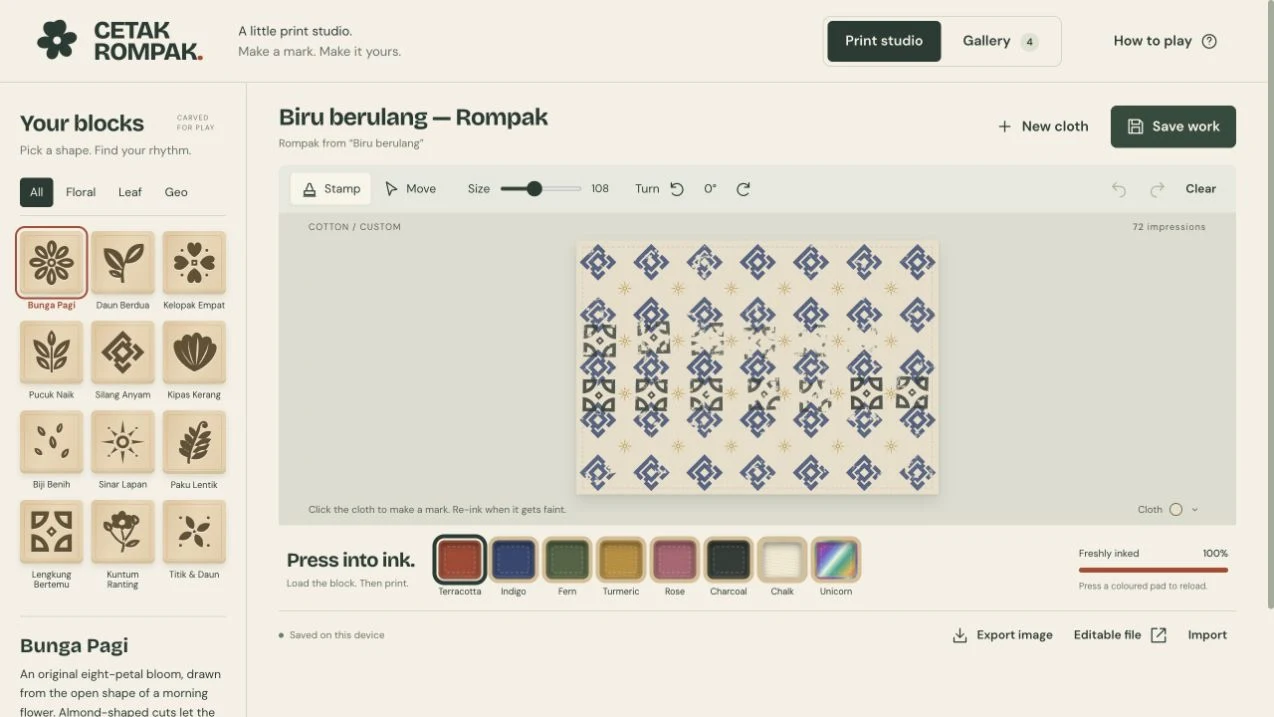
A playful digital block-printing studio where you stamp, re-ink, and “rompak” patterns to make them your own.
Cetak Rompak brings the rhythm of textile block printing into an interactive digital workshop. Choose a floral, leaf, or geometric block, press it onto a coloured ink pad, and stamp onto virtual cloth. Each impression uses up ink, leaving increasingly faded and patchy marks until you reload. Every starter block has a name and an inspiration note. Prints remain editable: move, recolour, rotate, or reorder them to explore different compositions. Press Rompak to fork a design, preserve its original, and create your own version. The name playfully reinterprets “cetak rompak”—commonly associated with piracy—as an invitation to remix. Inspired by Malay wordplay and textile-making processes, the project makes pattern creation approachable through experimentation and shared creativity. Built with AI assistance, the working prototype includes physical block interactions, coloured ink pads, editable layers, a local gallery, and image and editable-file exports. Prompt-generated and image-inspired AI blocks are planned next. Its starter motifs are contemporary original designs, not reproductions presented as historical artefacts.
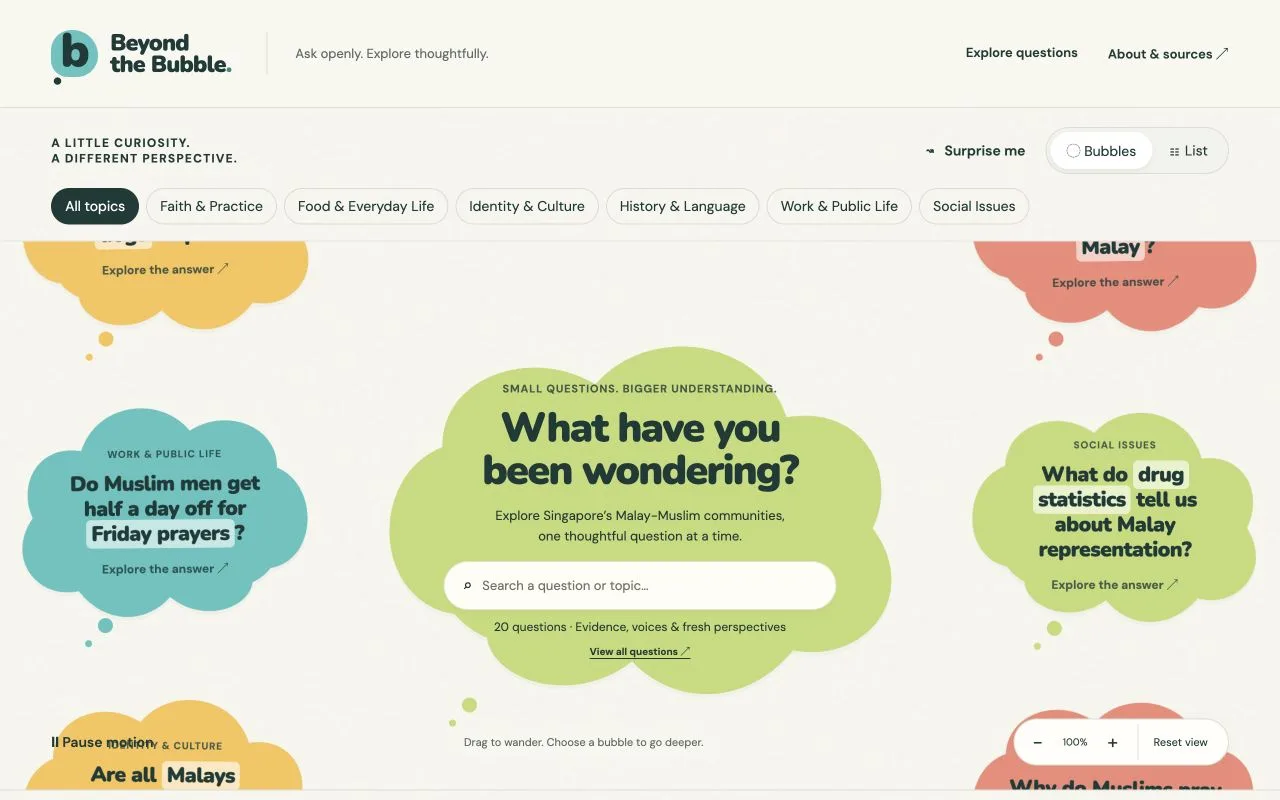
A Q&A interactive site to demystify Malay Stereotypes
People have questions, they are swept under the rug. We bring it to light.

A playful Singapore mini-game where you survive everyday moments with Singlish.
CAN OR NOT? turns familiar Singapore moments—from chope-ing a hawker seat to taking the MRT—into a funny, mascot-led Singlish adventure. Each round randomly selects five scenarios from an editable bank of eight. Players choose the most natural response, see a playful reaction and a short explanation, then receive a Singlish Aura score and a downloadable passport card. The prototype is mobile-first and designed to celebrate local language and everyday culture through play.

Engaging game based on the legend of Redhill with cultural learnings
We cannot forget these stories and by engaging the players, we retell these stories with learnings.
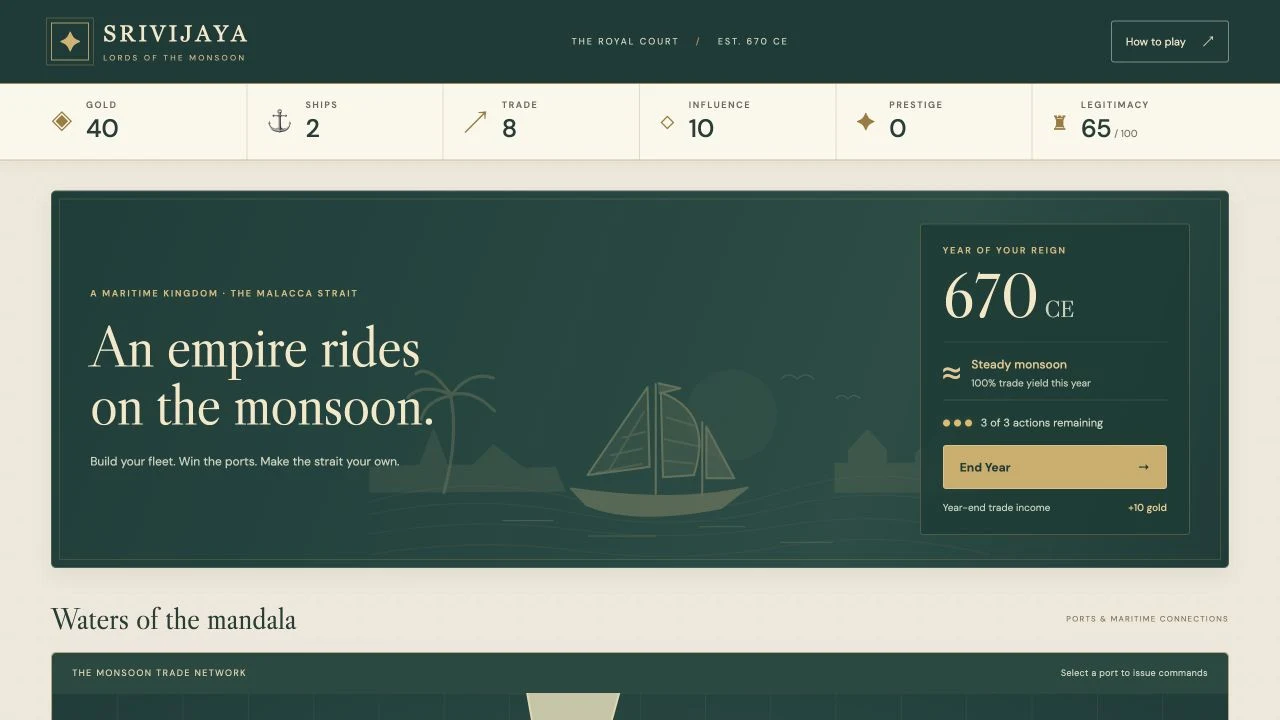
Rule the monsoon, command the ports, and build Srivijaya into the greatest maritime power of its age.
It lets players experience how Srivijaya grew through trade, diplomacy, ports, and maritime influence, instead of only reading about it. It matters because it turns a complex part of Southeast Asian history into something people can explore, understand, and remember through their own decisions.
Build a small interactive map showing how one family recipe changes across generations, with each version represented by ingredients and notes. Use invented examples or details contributed with permission; do not upload,
It makes change and memory visible without suggesting there is one correct version of a dish. Build tonight: Create three recipe cards and connect them with arrows; add a short note about what changed in each invented or permission-cleared version. First step: Choose one recipe and list three ways it could vary, using fictional details until contributors agree to share.
The evening ends. The questions don’t. Explore ongoing stewardship research.